
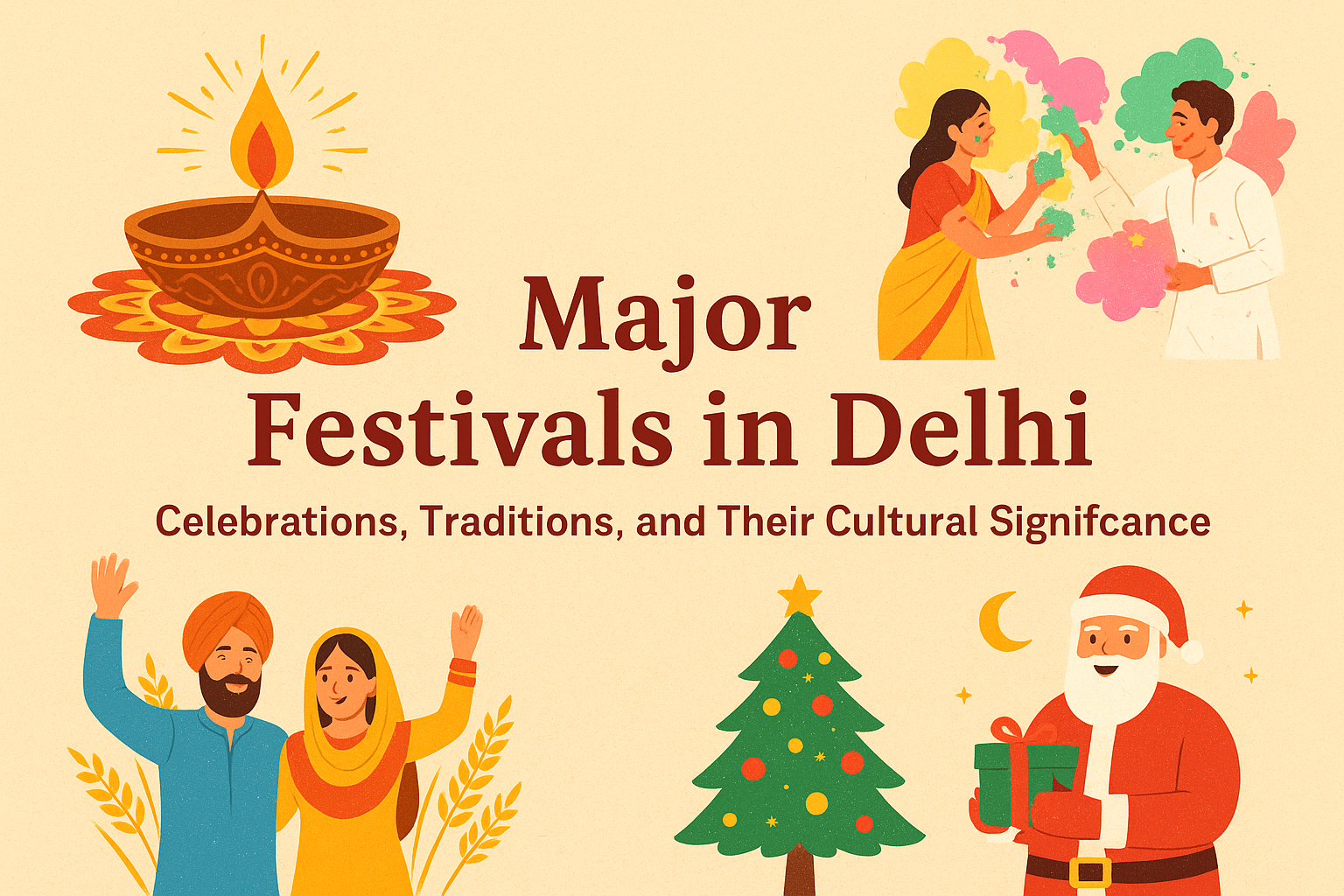
Delhi, the vibrant capital of India, is not only a political and cultural hub but also a city where traditions, spirituality, and celebrations come alive throughout the year. The diverse population, representing various regions, religions, and communities, makes Delhi a melting pot of festivals that are celebrated with unmatched enthusiasm and fervor. From grand religious gatherings to cultural parades and community fairs, the festivals in Delhi reflect its rich heritage and the spirit of togetherness.
In this article, we explore the major festivals celebrated in Delhi, their historical and cultural significance, and how these festivals bring people together. Whether you’re a local or a traveler looking to experience the festive pulse of the city, this guide will help you understand the essence of Delhi’s celebrations.
Table of Contents
Introduction
Delhi’s festivals reflect centuries of tradition, devotion, and cultural exchange. The city’s strategic location as the capital draws people from all corners of India and abroad, making it a cosmopolitan center where celebrations are inclusive, diverse, and exuberant. Festivals in Delhi are marked by community gatherings, religious rituals, music, food, dance, and charity drives that promote harmony.
1. Diwali – The Festival of Lights
Diwali, celebrated with great pomp in Delhi, is one of the most anticipated festivals of the year. Observed by Hindus, Jains, Sikhs, and others, it symbolizes the victory of light over darkness and good over evil.
Significance
- Marks Lord Rama’s return to Ayodhya after defeating Ravana.
- Celebrated as the day Lord Krishna destroyed the demon Narakasura.
- Also signifies spiritual enlightenment and prosperity.
Celebrations in Delhi
- The streets of Chandni Chowk, Connaught Place, and South Delhi are adorned with thousands of diyas (oil lamps), lights, and rangoli designs.
- Fireworks displays light up the sky, and markets bustle with sweets, gifts, and festive attire.
- Temples and gurudwaras hold special prayers.
2. Holi – The Festival of Colors
Holi, known as the festival of colors, is celebrated with unrestrained enthusiasm in Delhi. It welcomes spring and spreads happiness.
Significance
- Commemorates the burning of the demoness Holika, symbolizing the triumph of good over evil.
- Associated with Lord Krishna’s playful love for Radha.
Celebrations in Delhi
- People smear colored powders and water balloons on each other in residential areas like Lajpat Nagar and Hauz Khas.
- Cultural events, music, and dance performances take place across parks and community centers.
- Traditional sweets like gujiya and thandai are widely shared.
3. Eid – The Spirit of Sharing
Eid-ul-Fitr and Eid-ul-Adha are celebrated with warmth and generosity in Delhi, particularly in areas like Jama Masjid and Nizamuddin.
Significance
- Eid-ul-Fitr marks the end of Ramadan, the Islamic holy month of fasting.
- Eid-ul-Adha commemorates the sacrifice made by Prophet Ibrahim.
Celebrations in Delhi
- Special prayers at mosques in the morning.
People exchange greetings, gifts, and share delicious foods such as biryani, kebabs, and sheer khurma.
Charitable activities and community outreach are emphasized.
4. Durga Puja – The Celebration of Power
Durga Puja, though originally rooted in Bengal, has a vibrant presence in Delhi, especially in neighborhoods like Mandir Marg and Bengali Associations.
Significance
- Celebrates the victory of Goddess Durga over Mahishasura, symbolizing the triumph of righteousness.
Celebrations in Delhi
- Artistic pandals (temporary structures) are set up with elaborate decorations.
- Cultural programs like dance, drama, and music performances are organized.
- Traditional Bengali food stalls serve delights such as luchi, cholar dal, and sweets.
5. Christmas – Spreading Joy and Love
Christmas, celebrated on December 25, is embraced by the Christian community as well as people from various backgrounds in Delhi.
Significance
- Marks the birth of Jesus Christ and promotes peace and goodwill.
Celebrations in Delhi
- Churches in areas like Kailash Colony and Connaught Place hold midnight mass services.
- Markets are decked out with lights, stars, and Christmas trees.
- Gift exchanges, carol singing, and community dinners are popular traditions.
6. Gurpurab – Honoring Sikh Traditions
Gurpurab, especially Guru Nanak Jayanti, is one of the most revered festivals among the Sikh community in Delhi.
Significance
- Celebrates the birth of Guru Nanak, the founder of Sikhism.
Celebrations in Delhi
- Processions, prayers, and community service activities are organized in gurudwaras such as Bangla Sahib.
- Langars (free community kitchens) serve meals to all, regardless of religion or caste.
7. Makar Sankranti – The Harvest Festival
Makar Sankranti marks the transition of the sun into the Capricorn sign and is celebrated to welcome longer days.
Significance
- Associated with harvest, charity, and spiritual cleansing.
Celebrations in Delhi
- Kite flying is a popular activity, with rooftops covered in vibrant kites.
- Sesame sweets like tilgul and jaggery-based treats are shared.
- People visit temples and take holy dips in sacred water bodies.
8. Independence Day and Republic Day – National Pride
Though not religious festivals, Independence Day (August 15) and Republic Day (January 26) are celebrated with great patriotism and pride in Delhi.
Significance
- Independence Day marks India’s freedom from British rule.
- Republic Day celebrates the adoption of the Indian Constitution.
Celebrations in Delhi
- The Red Fort hosts the Prime Minister’s address and a flag hoisting ceremony.
- Parades at India Gate display military strength, cultural performances, and school bands.
- Public gatherings, community events, and fireworks reflect national unity.
9. Raksha Bandhan – The Bond of Protection
Significance
- Raksha Bandhan is a cherished festival that celebrates the bond between brothers and sisters. Sisters tie a sacred thread (rakhi) around their brothers’ wrists, praying for their long life and well-being, while brothers promise to protect and support them.
Celebrations in Delhi
- Families gather at home, and traditional sweets like laddoos and barfis are exchanged.
- Gift-giving is a central part of the celebration, with brothers often surprising their sisters with presents.
- Markets in areas like Karol Bagh and Chandni Chowk are bustling with rakhis in various designs, from traditional to modern themes.
- Many community events are held to promote the spirit of family bonding.
10. Janmashtami – The Birth of Lord Krishna
Significance
- Janmashtami commemorates the birth of Lord Krishna, one of the most beloved deities in Hindu mythology. It symbolizes the triumph of good over evil and devotion to righteousness.
Celebrations in Delhi
- Temples like ISKCON Delhi and Dwarkadhish Mandir are beautifully decorated with flowers and lights.
- Devotees fast during the day and gather at midnight for special prayers and aarti to mark Krishna’s birth.
- Cultural programs, devotional singing (bhajans), and dance performances are organized.
- Dahi-handi competitions, where participants form human pyramids to break pots of curd, are popular among youth.
Other Celebrations and Fairs
Apart from the major festivals, Delhi hosts several fairs and cultural celebrations throughout the year:
- International Mango Festival – Celebrating India’s fruit heritage.
- Qutub Festival – A cultural event showcasing music, dance, and art near Qutub Minar.
- Delhi Book Fair – Attracts literary enthusiasts and students.
- Camel and Craft Fairs – Exhibiting rural art forms and handicrafts from across India.
These events add to the vibrant festive calendar and draw locals and tourists alike.
Conclusion
Delhi’s festivals are a beautiful reflection of its pluralistic ethos, where diversity thrives and traditions are passed down through generations. Each festival, whether religious or cultural, reinforces values of compassion, unity, celebration, and service. The celebrations are a reminder that festivals in Delhi are not just about rituals but about community bonding, sharing joy, and preserving heritage.
Exploring Delhi’s festivals offers a unique window into the city’s soul, making it a must-visit destination for travelers seeking authentic cultural experiences.
Also Check: 10 Famous Restaurants in Delhi for Food Lovers